Norse activity securely dated in Newfoundland
Dated wood establishes Norse activity in Newfoundland in 1021. It does not identify the expedition leader or establish its arrival date.
1 source reference · Draft · Newfoundland and Labrador
HISTORY · RESEARCH PREVIEW
Explore places, political boundaries and the records behind them.
159 research drafts, not verified findings. Sources vary in review depth; some were read only as search excerpts. Dates, translations and historical geometry remain incomplete. Missing records do not mean nothing happened.
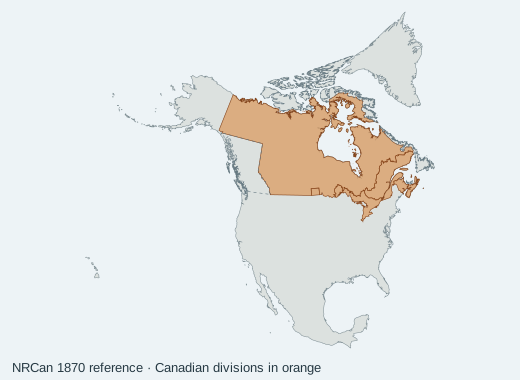
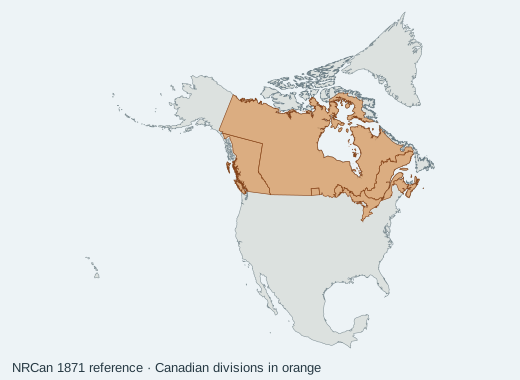
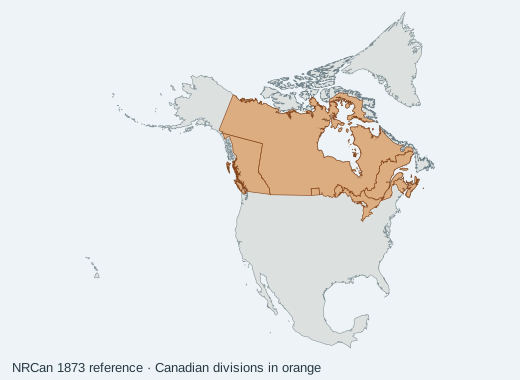
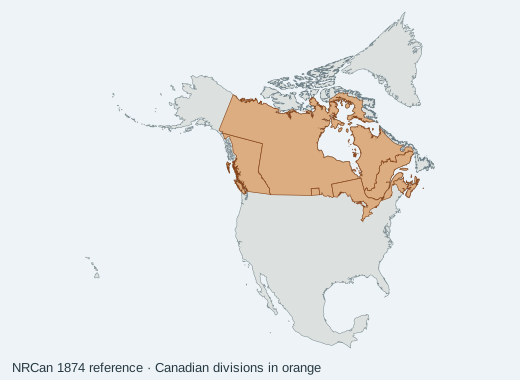
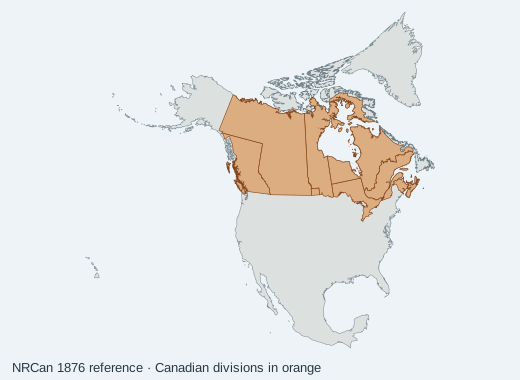
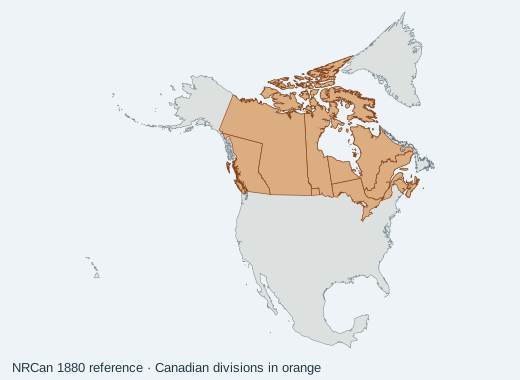
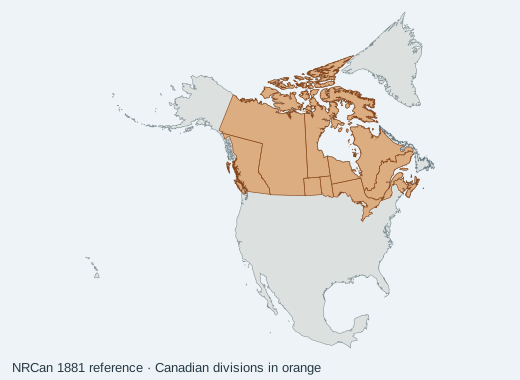
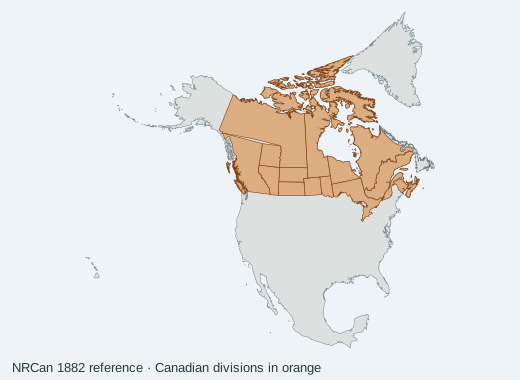
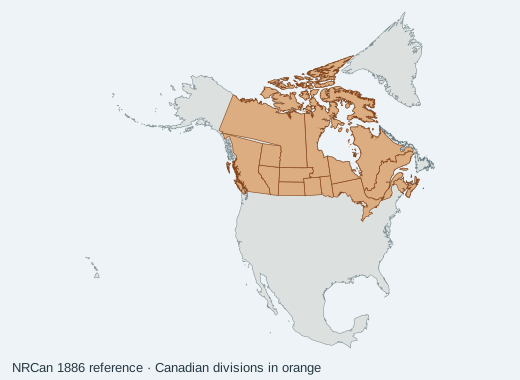
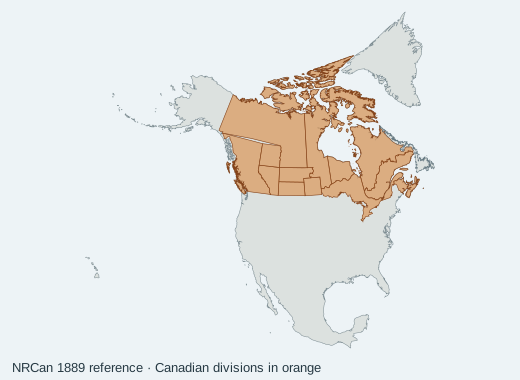
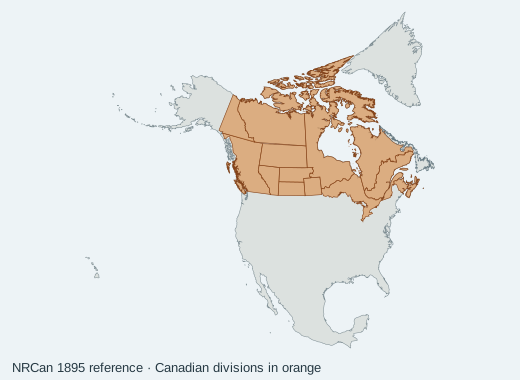
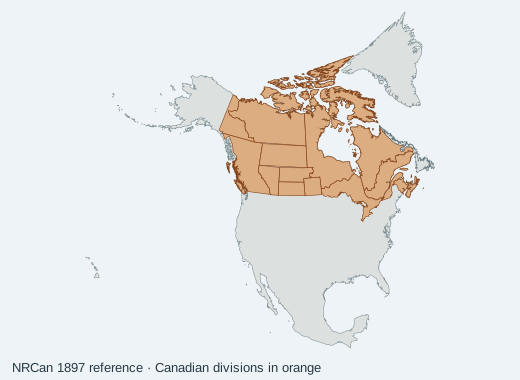
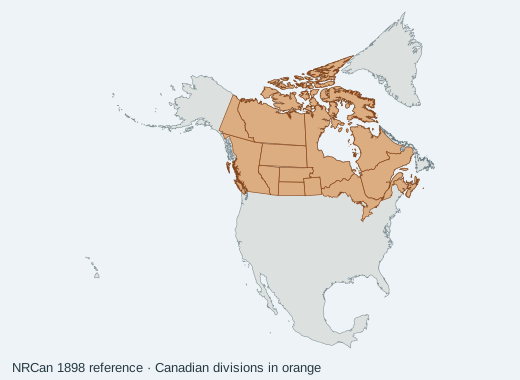
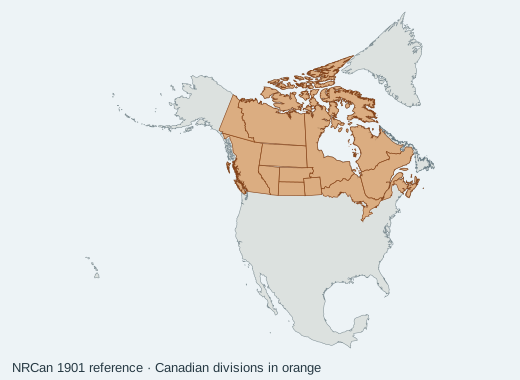
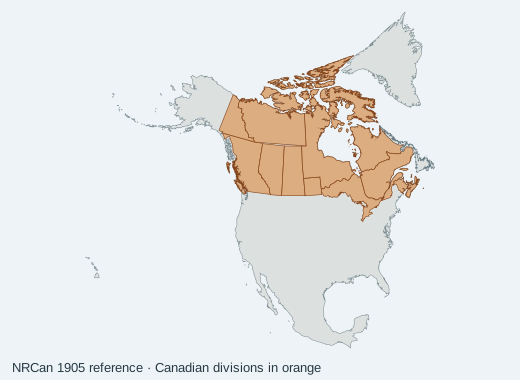
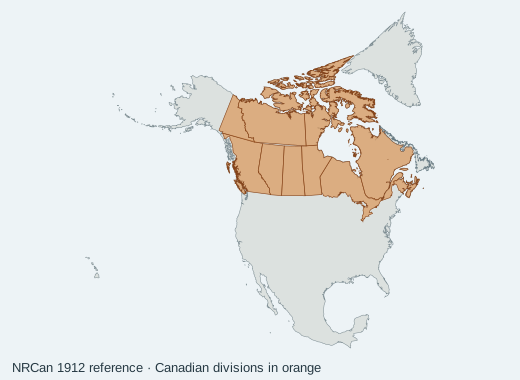
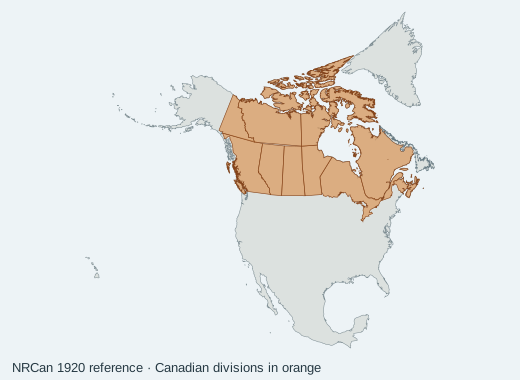
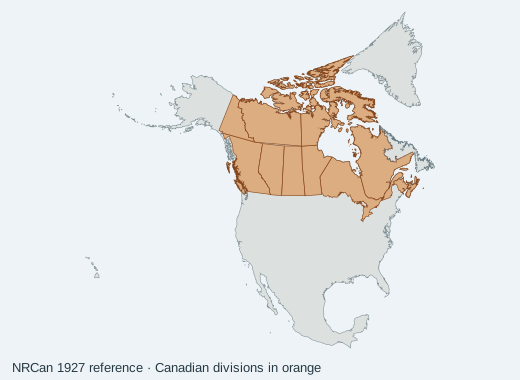
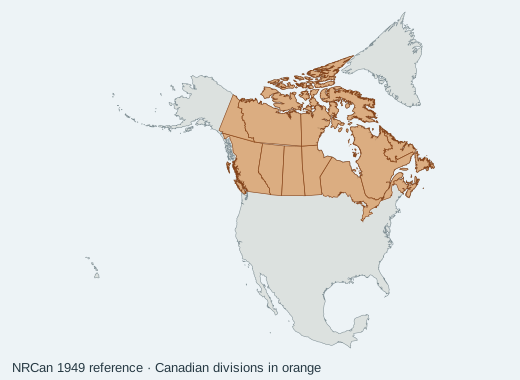
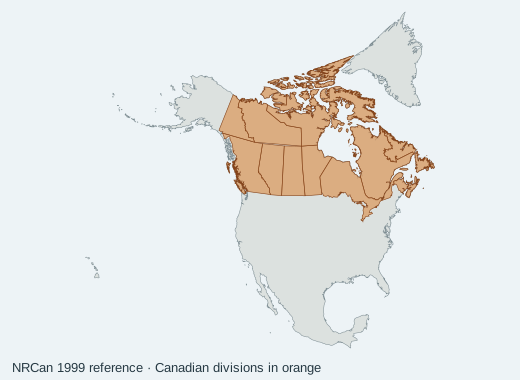
These are generalized, source-derived maps from 1867 onward. They do not reconstruct Indigenous territories, pre-1867 boundaries, exact municipal boundaries, or legal treaty areas.
1867 snapshot. Within-year legal commencement dates are unresolved.
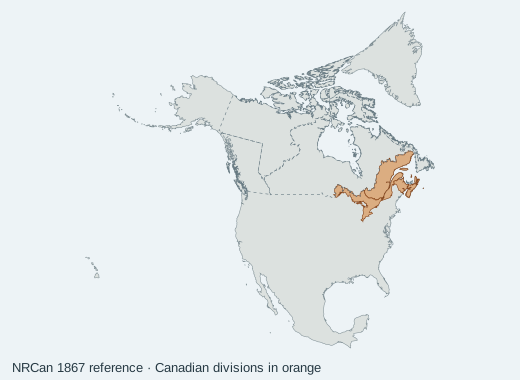
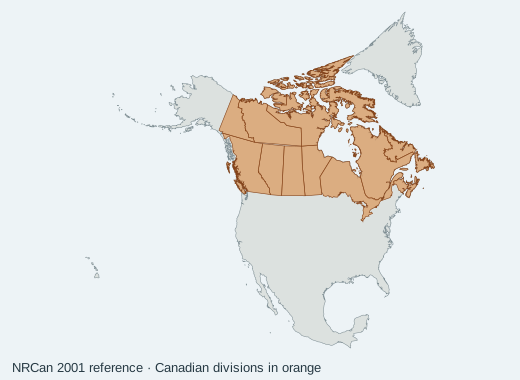
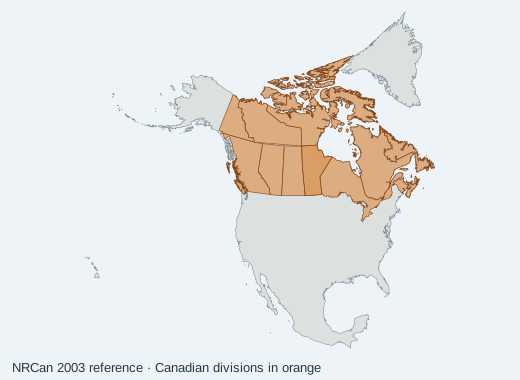
A preceding snapshot is an administrative reference, not a calculated area of territorial gain or loss. Map controls do not filter the event catalogue below.
Adapted from Natural Resources Canada; includes generalized modern geographic reference. Not an archival photograph or legal boundary determination. Contains information licensed under the Open Government Licence — Canada. Made with Natural Earth. No government endorsement is implied.
Present-day regions are navigation aids, not jurisdictions at the event date. “Arctic” groups northern records; it does not place every northern city in the geographic Arctic. Undated records are excluded from year searches.
159 matching research drafts · Page 1
Dated wood establishes Norse activity in Newfoundland in 1021. It does not identify the expedition leader or establish its arrival date.
1 source reference · Draft · Newfoundland and Labrador
Seasonal fishermen from several European regions visited Ferryland before its seventeenth-century plantation; archaeological evidence also documents Beothuk occupation.
1 source reference · Draft · Newfoundland and Labrador, Cross-border
Fagundes probably explored southern Newfoundland around 1520. A reported Portuguese settlement has been associated with Cape Breton, but location and chronology remain uncertain.
1 source reference · Draft · Atlantic, Newfoundland and Labrador
Cartier’s first voyage belongs alongside the earlier fisheries and Indigenous coastal histories.
1 source reference · Draft · Atlantic, Newfoundland and Labrador
The second voyage and wintering bring the St. Lawrence interior into the timeline.
1 source reference · Draft · St. Lawrence and Great Lakes
Basque expeditions developed a large seasonal whaling enterprise in the Strait of Belle Isle from the mid-sixteenth into the early seventeenth century.
1 source reference · Draft · Newfoundland and Labrador, St. Lawrence and Great Lakes
Dugua de Mons and Champlain’s expedition established a settlement on Saint Croix Island before relocating the following year.
1 source reference · Draft · Atlantic, Cross-border
The French expedition established the Port-Royal Habitation in the Annapolis Basin following its Saint Croix winter.
1 source reference · Draft · Atlantic
Champlain organized the Order of Good Cheer during winter 1606–1607 to improve food and morale. Its founding should be distinguished from the November 1606 theatrical performance.
2 source references · Draft · Atlantic
Champlain established the French settlement at Québec in 1608; Indigenous trade and diplomacy were central to the colonial network.
1 source reference · Draft · St. Lawrence and Great Lakes
Membertou and members of his extended family were baptized on June 24, 1610 within the developing French–Mi’kmaw relationship.
1 source reference · Draft · Atlantic
John Guy led an officially sanctioned English colony at Cupids, adding another colonial development alongside French settlement in Acadia.
1 source reference · Draft · Newfoundland and Labrador
The English destruction of the habitation interrupted settlement at the original Port-Royal site.
1 source reference · Draft · Atlantic
A devastating epidemic occurred in New England in 1616–1619. Leptospirosis is a proposed explanation, not a confirmed diagnosis for all early coastal epidemics.
1 source reference · Draft · Cross-border
George Calvert’s Ferryland plantation became an important settlement and commercial site. Settlement continued after Calvert left in 1629.
1 source reference · Draft · Newfoundland and Labrador
Approximately seventy Scottish colonists arrived under William Alexander’s colonial project near present Annapolis Royal.
1 source reference · Draft · Atlantic
French immigration expanded following restoration of Acadia to France in 1632; arrivals between 1632 and 1653 contributed to developing Acadian communities.
1 source reference · Draft · Atlantic
The French settlement of Ville-Marie was established in 1642, a colonial milestone in the history of Montréal.
1 source reference · Draft · St. Lawrence and Great Lakes
Françoise-Marie Jacquelin defended Fort La Tour during her husband’s absence. D’Aulnay captured the fort in the struggle between competing French administrations.
1 source reference · Draft · Atlantic
French immigration ceased under English control after 1654 and resumed in 1670 following the Treaty of Breda.
1 source reference · Draft · Atlantic
Approximately 800 women immigrated with royal financial and administrative support to marry and establish families. Their lives and descendants are central to French-Canadian demographic and genealogical history.
1 source reference · Draft · St. Lawrence and Great Lakes
Jean Talon conducted a census of the colonial population in 1666. This is a milestone in colonial administration and surviving population records, not a census of every Indigenous nation.
1 source reference · Draft · St. Lawrence and Great Lakes
Beaubassin developed in the 1670s at Sikniktuk, a Mi’kmaw region connected by overland and portage routes.
1 source reference · Draft · Atlantic
The 1670 royal charter granted the company exclusive trading rights in the Hudson Bay watershed, termed Rupert’s Land.
1 source reference · Draft · Prairies, Arctic, St. Lawrence and Great Lakes
On August 4, the governor of New France and representatives of Haudenosaunee and more than thirty allied First Nations signed a major peace agreement affecting a wide interior trading region.
1 source reference · Draft · St. Lawrence and Great Lakes, Cross-border
The Abenaki Museum presents Fort Odanak’s history for 1704–1759, adding a nation-authored thread to the atlas.
1 source reference · Draft · St. Lawrence and Great Lakes, Cross-border
The Treaty of Utrecht transferred French control of Acadia to Britain while leaving its boundaries unclear. First Nations did not recognize the treaty as disposing of their territories.
1 source reference · Draft · Atlantic
France retained Cape Breton and Prince Edward Island after Utrecht. Louisbourg’s fortified town developed from 1719 and became their administrative and maritime centre.
1 source reference · Draft · Atlantic
A sequence of Peace and Friendship agreements and renewals established relationships with Britain without surrendering Indigenous rights to traditionally used lands and resources.
1 source reference · Draft · Atlantic, Cross-border
British forces captured Louisbourg in 1745, an important turning point in the imperial contest for the Atlantic region.
1 source reference · Draft · Atlantic
The Treaty of Aix-la-Chapelle returned Port-la-Joye to French administration after wartime occupation.
1 source reference · Draft · Atlantic
The British established Halifax in 1749 as a settlement and military centre in Mi’kma’ki.
1 source reference · Draft · Atlantic
Nova Scotia’s council ordered deportation on July 28. People from Beauséjour were deported or sought refuge toward the Miramichi, Île Saint-Jean and Canada.
1 source reference · Draft · Atlantic
Fleeing Acadians and First Nation allies formed refuge settlements associated with Boishébert. Refugees later moved north; surviving people also faced surrender and imprisonment.
1 source reference · Draft · Atlantic, St. Lawrence and Great Lakes
British forces captured Louisbourg again in 1758, ending its role as a major French Atlantic stronghold.
1 source reference · Draft · Atlantic
The expulsion from Île Saint-Jean was among the largest and deadliest episodes of the Acadian deportations.
1 source reference · Draft · Atlantic
The battle took place on September 13, 1759; Québec surrendered on September 18. These were major military milestones, but did not by themselves end the war or transfer every French imperial claim.
1 source reference · Draft · St. Lawrence and Great Lakes
A French squadron sent to aid Québec sought shelter in the Restigouche. Fighting ran from June 22 to July 8.
1 source reference · Draft · Atlantic, St. Lawrence and Great Lakes
French forces won the Battle of Sainte-Foy on April 28, 1760 and the British withdrew behind Québec’s walls. The campaign illustrates why conquest cannot be reduced to a single 1759 battle.
1 source reference · Draft · St. Lawrence and Great Lakes
British armies converged on Montréal in the 1760 campaign, culminating in its surrender and the end of organized French colonial military resistance in Canada.
1 source reference · Draft · St. Lawrence and Great Lakes
This preview preserves 159 draft events, 128 source records and 13 selected movement records. It is a cumulative research base, not a complete history. Each event links to its evidence and research limitations.
Nation-authored Indigenous histories, municipal histories, modern treaties, migration and many social histories need further research. Incorporation dates do not date human occupation. Empty peoples fields do not imply an absence of Indigenous peoples.
Native Land reference territory geometry is not distributed here while commercial licensing is unresolved. Pre-1867 political geometry and exact movement routes are unavailable. French translations are incomplete; missing translations are not generated or presented as reviewed.
Source collection: October 11–12, 2026. This is not a live feed. Corrections require a reviewed catalogue update; original source identifiers and version hashes are retained. Map images are rendered references, not archival photographs.