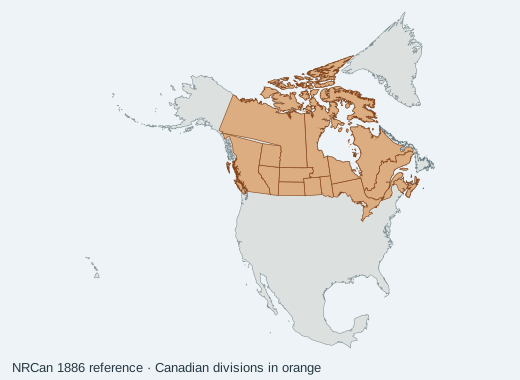
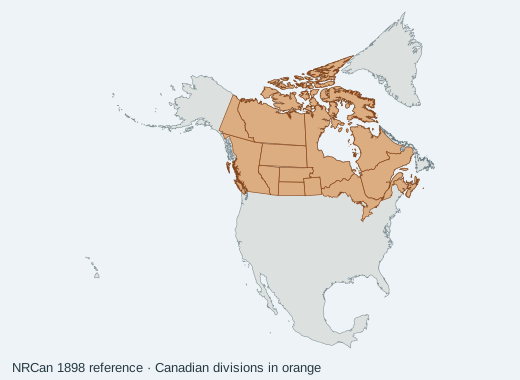
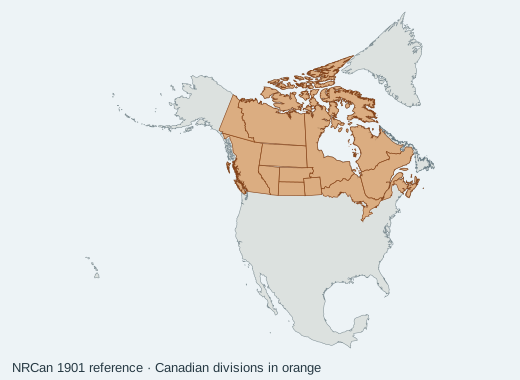
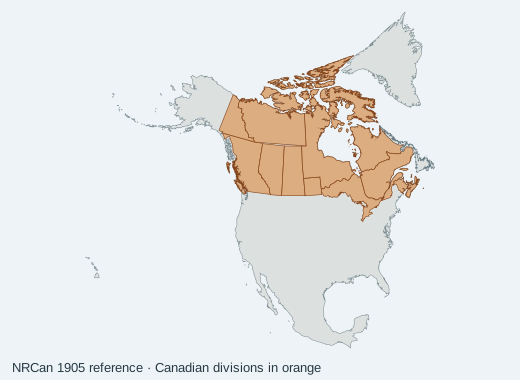
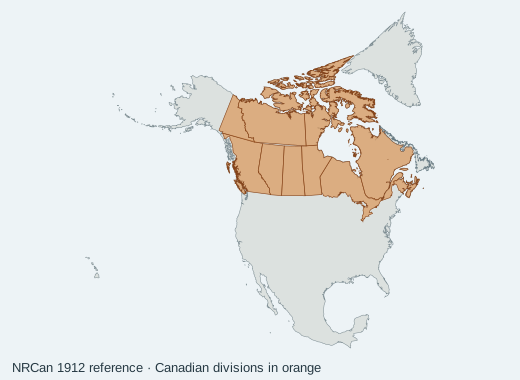
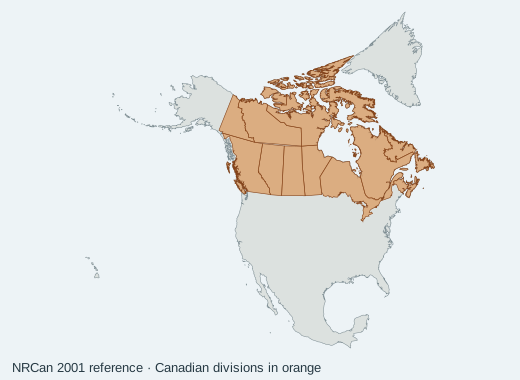
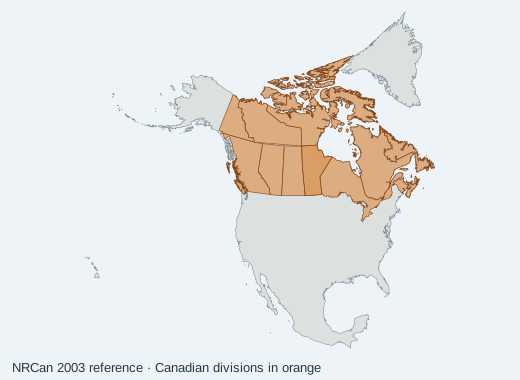
Mainland British Columbia colony established
The mainland Colony of British Columbia was established in 1858. It remained separate from Vancouver Island until their union in 1866.
1 source reference · Draft · Pacific
HISTORY · RESEARCH PREVIEW
Explore places, political boundaries and the records behind them.
159 research drafts, not verified findings. Sources vary in review depth; some were read only as search excerpts. Dates, translations and historical geometry remain incomplete. Missing records do not mean nothing happened.
These are generalized, source-derived maps from 1867 onward. They do not reconstruct Indigenous territories, pre-1867 boundaries, exact municipal boundaries, or legal treaty areas.
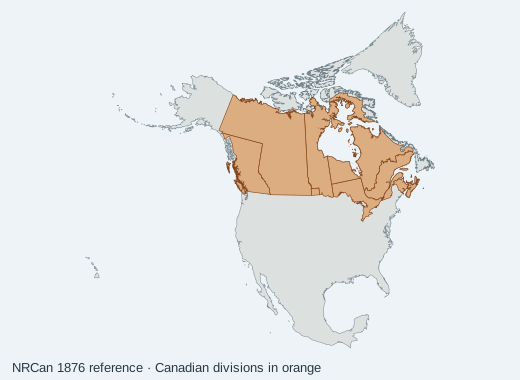
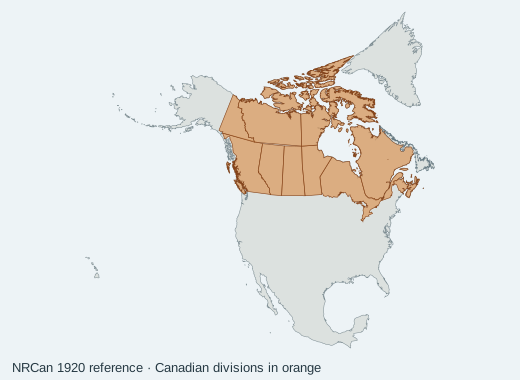
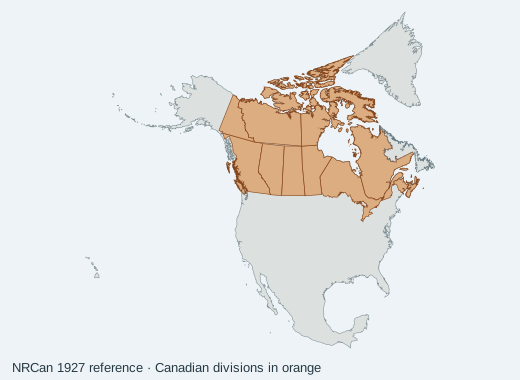
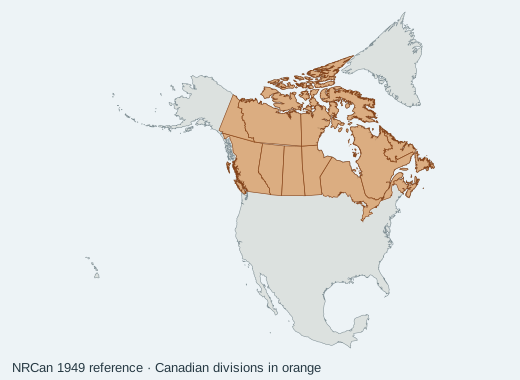
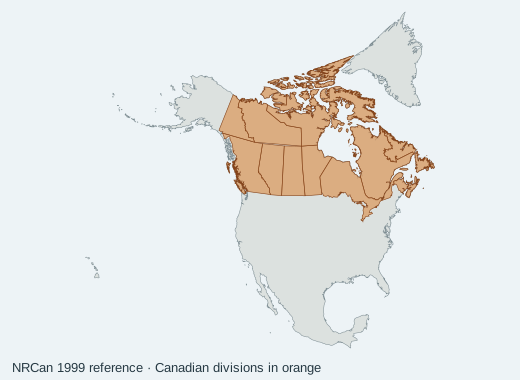
1867 snapshot. Within-year legal commencement dates are unresolved.
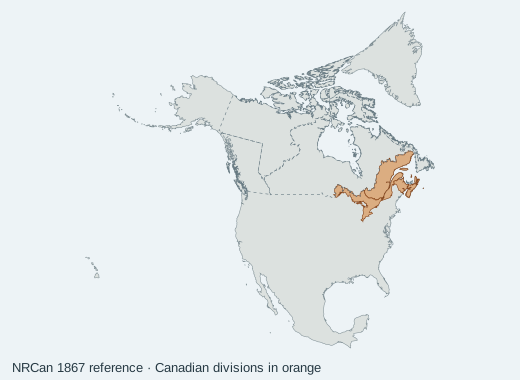
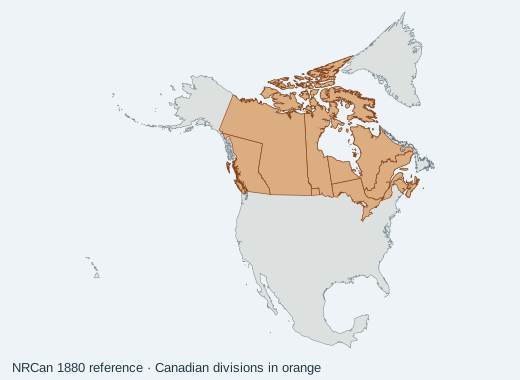
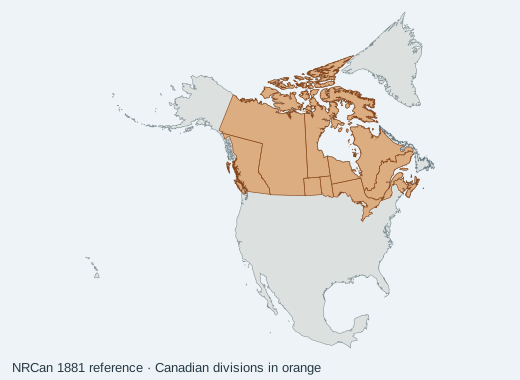
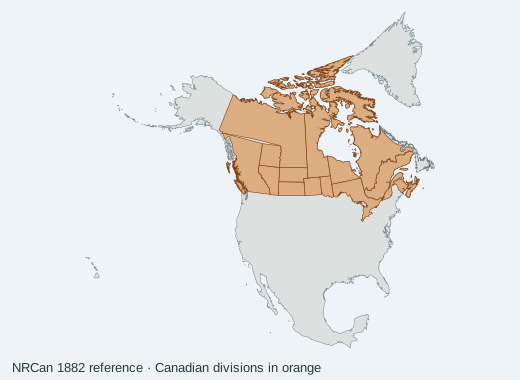
A preceding snapshot is an administrative reference, not a calculated area of territorial gain or loss. Map controls do not filter the event catalogue below.
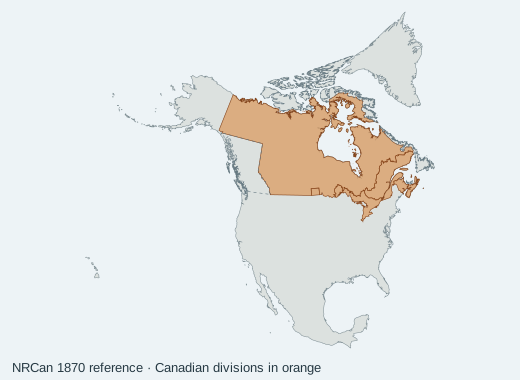
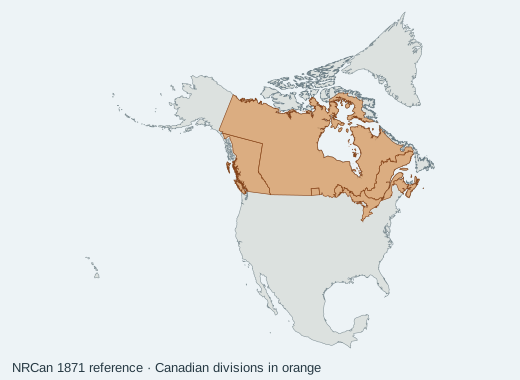
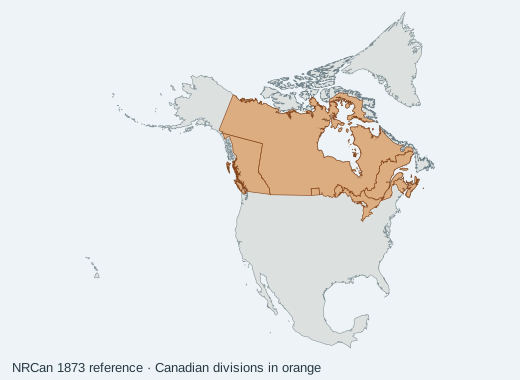
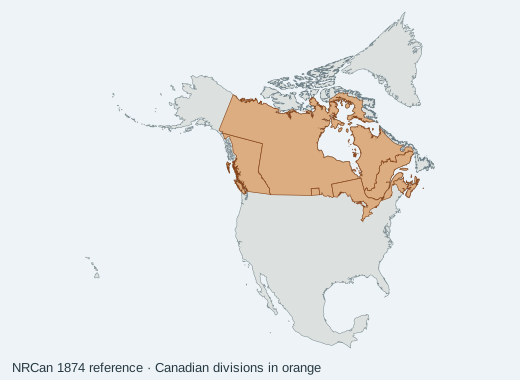
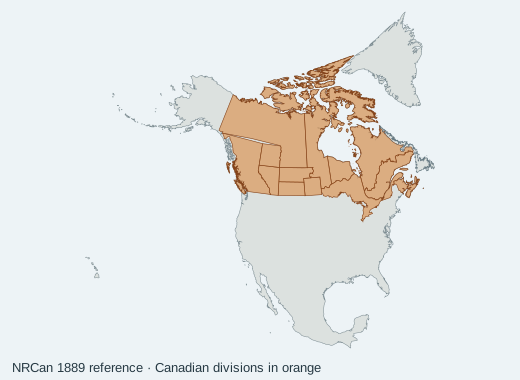
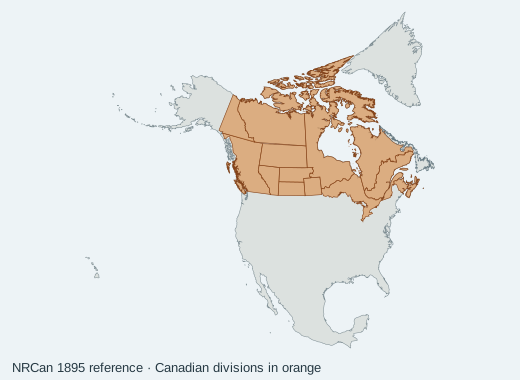
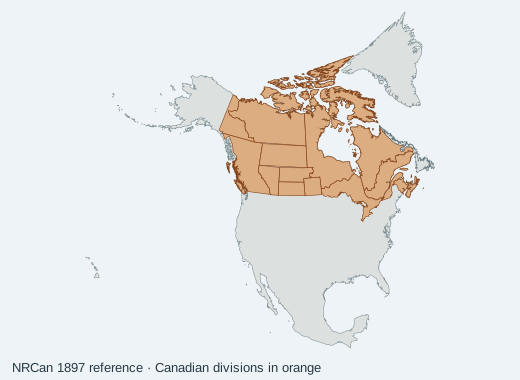
Adapted from Natural Resources Canada; includes generalized modern geographic reference. Not an archival photograph or legal boundary determination. Contains information licensed under the Open Government Licence — Canada. Made with Natural Earth. No government endorsement is implied.
Present-day regions are navigation aids, not jurisdictions at the event date. “Arctic” groups northern records; it does not place every northern city in the geographic Arctic. Undated records are excluded from year searches.
159 matching research drafts · Page 3
The mainland Colony of British Columbia was established in 1858. It remained separate from Vancouver Island until their union in 1866.
1 source reference · Draft · Pacific
A scouting party from San Francisco’s Black community arrived in Victoria on April 25, initiating an important migration thread across the Pacific border region.
1 source reference · Draft · Pacific, Cross-border
Victoria received city incorporation in 1862, distinct from the establishment of Fort Victoria in 1843.
1 source reference · Draft · Pacific
Conferences advanced a broader federation proposal from discussions initially associated with Maritime union. Newfoundland participated at Québec rather than Charlottetown.
1 source reference · Draft · Atlantic, St. Lawrence and Great Lakes
The two Pacific colonies were united as British Columbia before entry into Canadian Confederation.
1 source reference · Draft · Pacific
Confederation initially brought together Ontario, Québec, Nova Scotia and New Brunswick. Other present-day provinces and territories entered or were created later.
1 source reference · Draft · Atlantic, St. Lawrence and Great Lakes, National
Opposition to the proposed transfer of Rupert’s Land led to a Métis provisional government under Louis Riel; Manitoba was created in 1870.
1 source reference · Draft · Prairies
More than 100,000 children were sent from the British Isles to Canada through assisted child emigration from 1869 into the late 1930s.
1 source reference · Draft · National
The 1870 transfer brought Rupert’s Land and the North-Western Territory into Canada; Manitoba’s creation belongs to the related Red River record.
1 source reference · Draft · Prairies
British Columbia entered Canada on July 20, 1871.
1 source reference · Draft · Pacific, National
Eleven Numbered Treaties were concluded between 1871 and 1921. They included commitments concerning reserves, payments, resources and other obligations.
1 source reference · Draft · Prairies, Arctic, St. Lawrence and Great Lakes
Arbitration assigned the San Juan Islands to the United States, resolving the offshore boundary dispute left after the Oregon Treaty.
1 source reference · Draft · Pacific, Cross-border
Prince Edward Island entered Confederation after initially remaining outside the federation.
1 source reference · Draft · Atlantic, National
The incorporation act passed on November 8, 1873. The first municipal election followed in 1874, explaining why both years appear in civic histories.
1 source reference · Draft · Prairies
The Indian Act consolidated federal regulations governing many aspects of First Nations status, lands and administration. Its subsequent amendments require their own records.
1 source reference · Draft · National
Treaty 6 was negotiated in 1876; its commitments include a medicine-chest provision and assistance in specified famine or disease circumstances.
1 source reference · Draft · Prairies
Treaty 7 was concluded in 1877, adding a distinct southern Prairie agreement to the broad Numbered Treaties record.
1 source reference · Draft · Prairies
Chinese workers performed essential work on the railway in British Columbia under unequal pay and dangerous conditions.
1 source reference · Draft · Pacific, National
Britain transferred the Arctic islands to Canadian administration in 1880, a major missing northern map frame.
1 source reference · Draft · Arctic, National
Acadians have celebrated August 15 since the first national Acadian convention in Memramcook in 1881.
1 source reference · Draft · Atlantic, National
Calgary became an incorporated town in 1884; its city status followed in 1894.
1 source reference · Draft · Prairies
On April 24, Métis led by Gabriel Dumont and Cree and Dakota allies held back the advancing North West Field Force.
1 source reference · Draft · Prairies
The battle was fought May 9–12 during the Northwest Resistance. Métis community history continued beyond the military defeat.
1 source reference · Draft · Prairies
The Chinese Immigration Act introduced a fifty-dollar head tax, an explicitly discriminatory restriction on immigration.
1 source reference · Draft · National, Pacific
The last spike was driven on November 7, 1885, marking completion of the transcontinental railway connection.
1 source reference · Draft · Pacific, Prairies, National
Vancouver incorporated in April 1886. A major fire devastated the settlement that June.
1 source reference · Draft · Pacific
Edmonton incorporated as a town in 1892; city incorporation came in 1904.
1 source reference · Draft · Prairies
Calgary became a city in 1894, before Alberta became a province in 1905.
1 source reference · Draft · Prairies
Yukon separated from the Northwest Territories in 1898.
1 source reference · Draft · Arctic, National
Regina became a city in 1903, before Saskatchewan’s creation as a province in 1905.
1 source reference · Draft · Prairies
The Anglo-French Entente ended France’s Treaty Shore claims in Newfoundland after centuries of fishing involvement.
1 source reference · Draft · Newfoundland and Labrador, Cross-border
Edmonton became a city in 1904, before Alberta’s creation as a province.
1 source reference · Draft · Prairies
Alberta and Saskatchewan became provinces in 1905, filling a central gap in the western boundary sequence.
1 source reference · Draft · Prairies, National
The three provinces’ northern boundaries expanded in 1912.
1 source reference · Draft · St. Lawrence and Great Lakes, Prairies, Arctic
Passengers arriving aboard the Komagata Maru challenged Canada’s continuous-journey restriction, which limited immigration from non-European countries.
1 source reference · Draft · Pacific, Cross-border
Canadian and Newfoundland service in the First World War connected communities across the country to overseas conflict.
1 source reference · Draft · National, Newfoundland and Labrador
Canada detained people classified as enemy aliens during the First World War; internment operations continued after the armistice into 1920.
1 source reference · Draft · National, Pacific
On December 6, the Mont-Blanc and Imo collided, causing a massive explosion, fires and a wave that devastated nearby communities.
1 source reference · Draft · Atlantic
Federal electoral law removed the general sex barrier in 1918, while other eligibility restrictions remained.
1 source reference · Draft · National
A major general strike in Winnipeg in May and June 1919 became a defining episode in Canadian labour history.
1 source reference · Draft · Prairies, National
This preview preserves 159 draft events, 128 source records and 13 selected movement records. It is a cumulative research base, not a complete history. Each event links to its evidence and research limitations.
Nation-authored Indigenous histories, municipal histories, modern treaties, migration and many social histories need further research. Incorporation dates do not date human occupation. Empty peoples fields do not imply an absence of Indigenous peoples.
Native Land reference territory geometry is not distributed here while commercial licensing is unresolved. Pre-1867 political geometry and exact movement routes are unavailable. French translations are incomplete; missing translations are not generated or presented as reviewed.
Source collection: October 11–12, 2026. This is not a live feed. Corrections require a reviewed catalogue update; original source identifiers and version hashes are retained. Map images are rendered references, not archival photographs.