Chinese exclusion legislation
The 1923 Chinese Immigration Act sharply restricted immigration and separated families until its repeal in 1947.
1 source reference · Draft · National, Pacific
HISTORY · RESEARCH PREVIEW
Explore places, political boundaries and the records behind them.
159 research drafts, not verified findings. Sources vary in review depth; some were read only as search excerpts. Dates, translations and historical geometry remain incomplete. Missing records do not mean nothing happened.
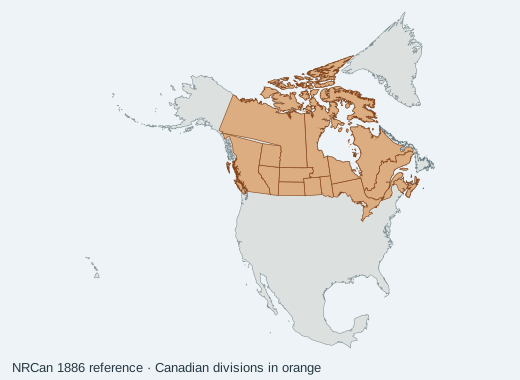
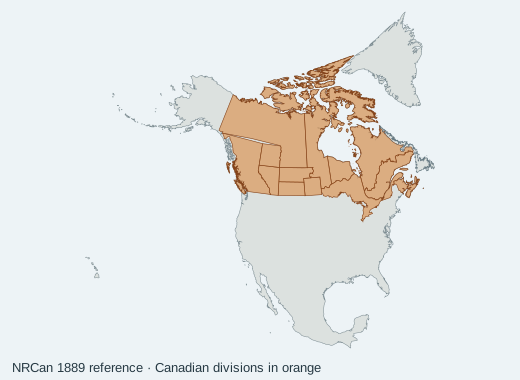
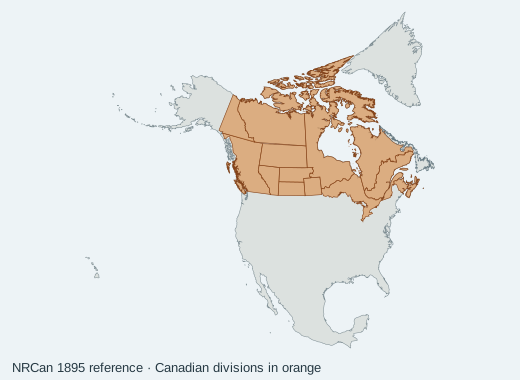
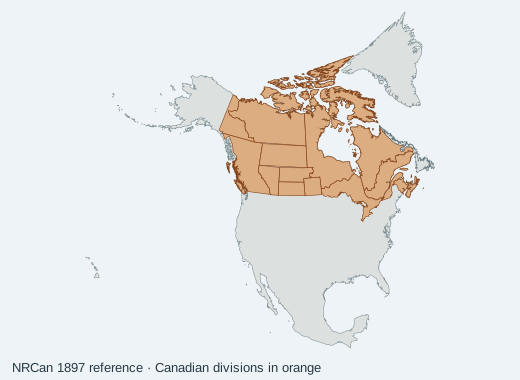
These are generalized, source-derived maps from 1867 onward. They do not reconstruct Indigenous territories, pre-1867 boundaries, exact municipal boundaries, or legal treaty areas.
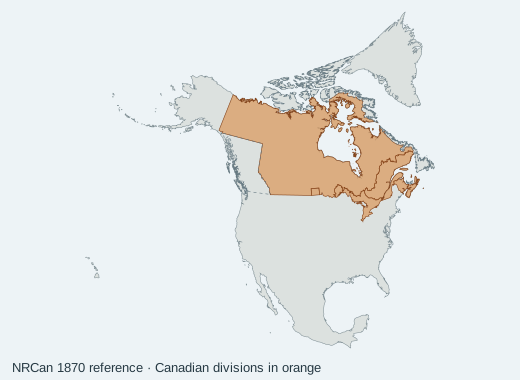
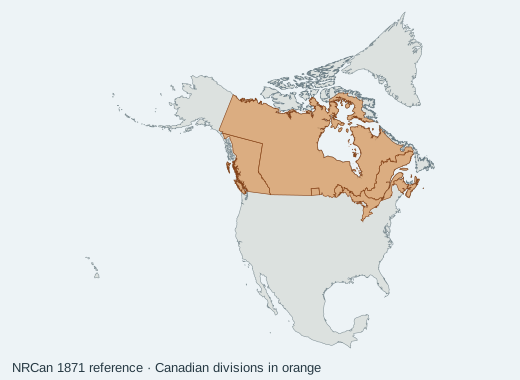
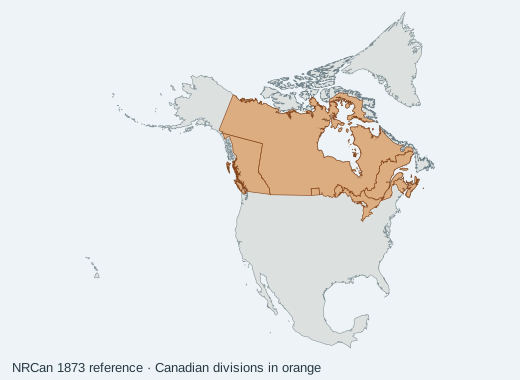
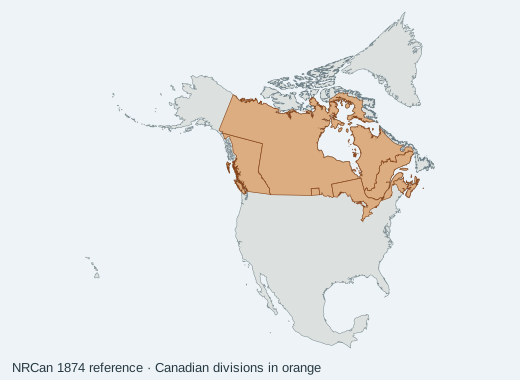
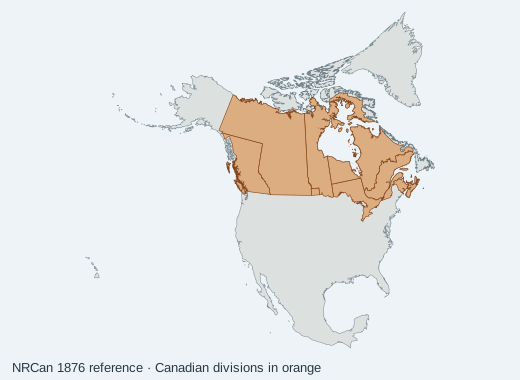
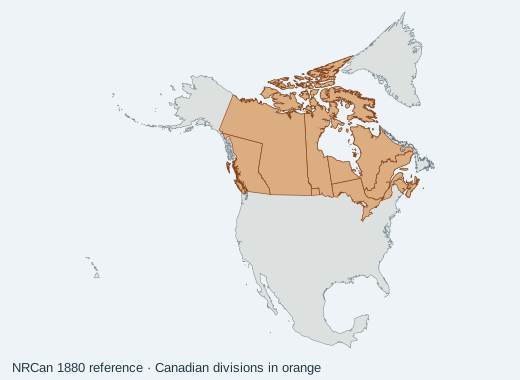
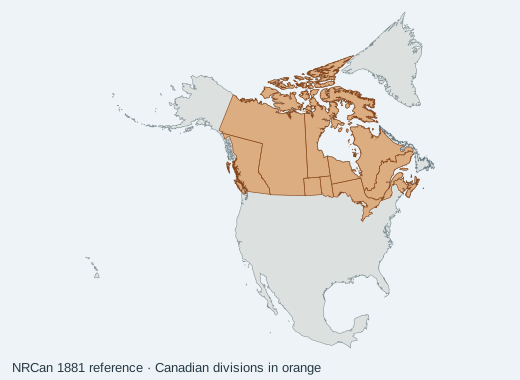
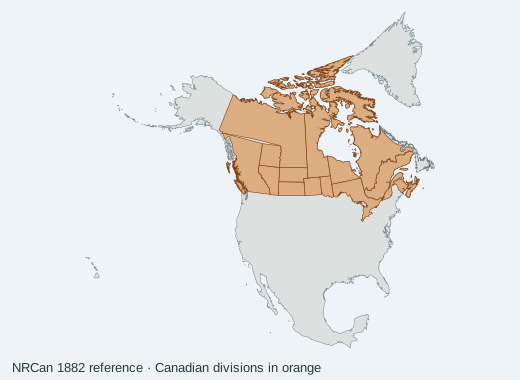
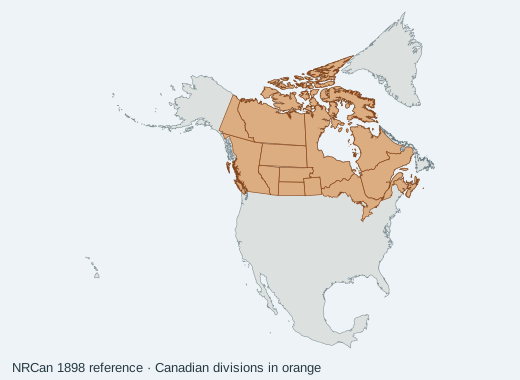
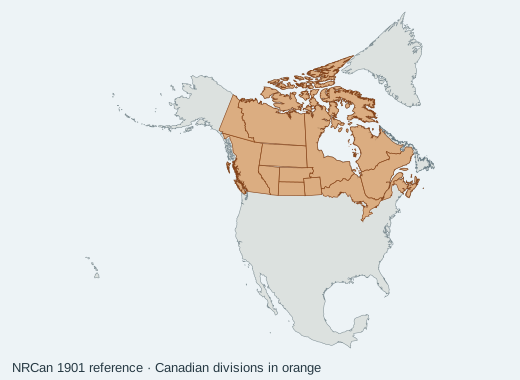
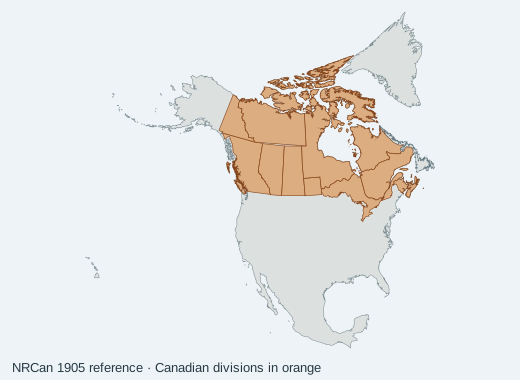
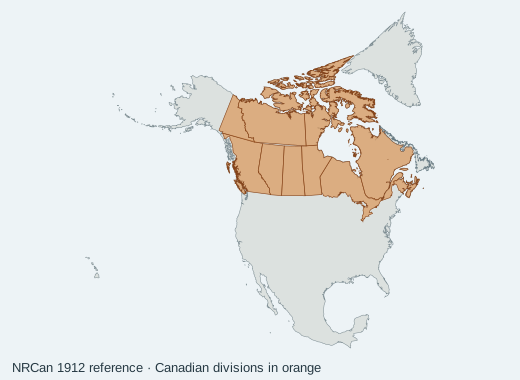
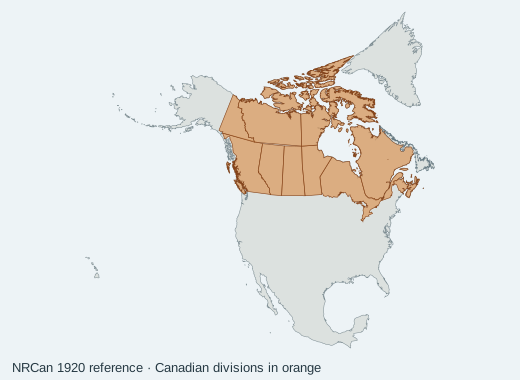
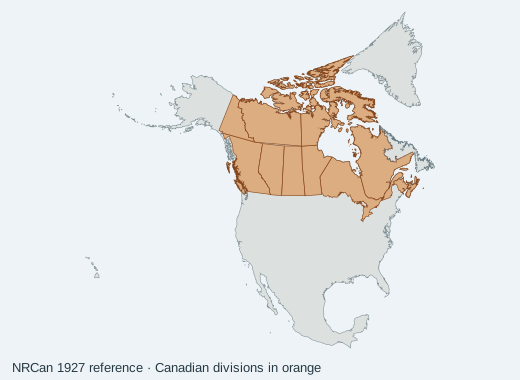
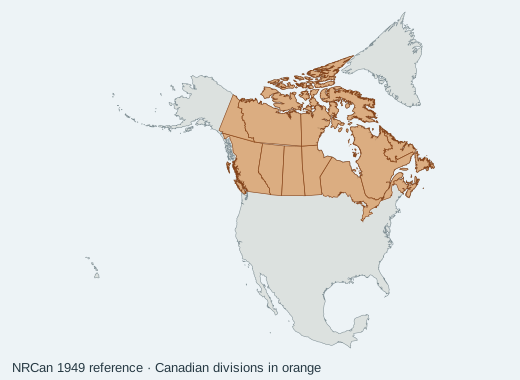
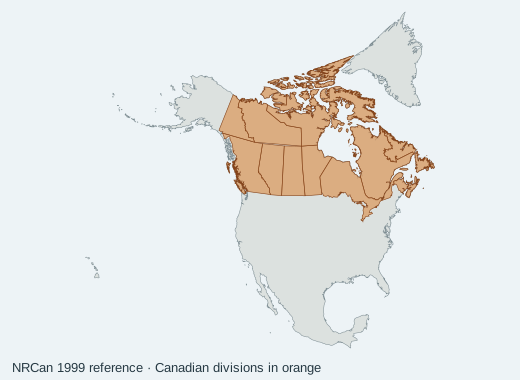
1867 snapshot. Within-year legal commencement dates are unresolved.
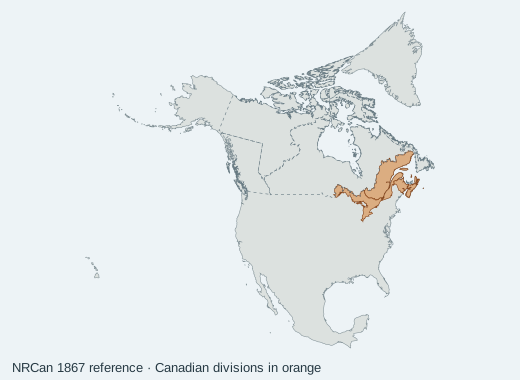
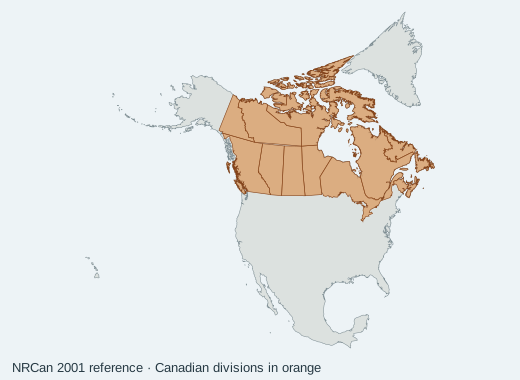
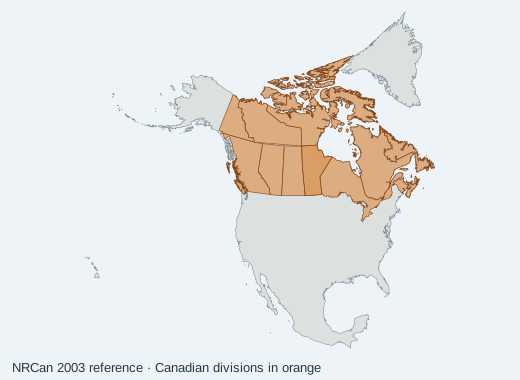
A preceding snapshot is an administrative reference, not a calculated area of territorial gain or loss. Map controls do not filter the event catalogue below.
Adapted from Natural Resources Canada; includes generalized modern geographic reference. Not an archival photograph or legal boundary determination. Contains information licensed under the Open Government Licence — Canada. Made with Natural Earth. No government endorsement is implied.
Present-day regions are navigation aids, not jurisdictions at the event date. “Arctic” groups northern records; it does not place every northern city in the geographic Arctic. Undated records are excluded from year searches.
159 matching research drafts · Page 4
The 1923 Chinese Immigration Act sharply restricted immigration and separated families until its repeal in 1947.
1 source reference · Draft · National, Pacific
The Judicial Committee of the Privy Council decided the Canada–Newfoundland Labrador boundary dispute on March 1.
1 source reference · Draft · Newfoundland and Labrador, St. Lawrence and Great Lakes
Pier 21 in Halifax operated as a major reception facility for immigrants between 1928 and 1971, connecting overseas arrivals with onward journeys in Canada.
1 source reference · Draft · Atlantic, National
The Statute recognized legal autonomy, while Canada retained an exception concerning amendment of its constitutional acts.
1 source reference · Draft · National
Newfoundland replaced responsible government with an appointed Commission of Government during its financial crisis.
1 source reference · Draft · Newfoundland and Labrador
Canada entered the war on September 10, 1939. Military, maritime and home-front experiences continued through 1945.
1 source reference · Draft · National, Atlantic, Pacific, Newfoundland and Labrador
Women gained the provincial franchise in Québec in 1940, distinct from the federal change in 1918.
1 source reference · Draft · St. Lawrence and Great Lakes
Japanese Canadians were removed from the West Coast in 1942, subjected to confinement and dispossession, and denied unrestricted return until 1949.
1 source reference · Draft · Pacific, National
War brides and their children travelled to Canada during and after the Second World War, with most processed through Pier 21 in Halifax.
1 source reference · Draft · Atlantic, National
The Canadian Citizenship Act came into force on January 1, 1947, establishing Canadian citizenship as a distinct legal status.
1 source reference · Draft · National
Newfoundland became Canada’s tenth province in 1949 after the referendum process.
1 source reference · Draft · Newfoundland and Labrador, National
Authorities closed Nutak and Hebron in the 1950s and relocated residents to other Labrador communities.
1 source reference · Draft · Arctic, Newfoundland and Labrador
Inuit regained the legal right to vote federally in 1950.
1 source reference · Draft · Arctic, National
Whitehorse incorporated as a city in 1950. Yukon’s capital subsequently moved there from Dawson in 1953.
1 source reference · Draft · Arctic
Inuit families were moved to High Arctic settlements in 1953–1955. The Royal Commission report examines the events and explanations offered for them.
1 source reference · Draft · Arctic
The territorial capital moved from Dawson to Whitehorse in 1953, changing the centres of government and administration.
1 source reference · Draft · Arctic
The 1960 electoral change removed the requirement for registered First Nations people to give up status in order to vote federally.
1 source reference · Draft · National
Canada’s new national flag was raised on Parliament Hill on February 15, 1965.
1 source reference · Draft · National
Yellowknife became the capital of the Northwest Territories in 1967, separate from municipal city status.
1 source reference · Draft · Arctic
The 1967 immigration regulations established a points-based assessment for selected prospective immigrants, reshaping Canada’s admission policy.
1 source reference · Draft · National
The voting age was lowered from 21 to 18 in 1970, expanding the federal electorate.
1 source reference · Draft · National
The agreement was signed on November 11, 1975, adding a major modern-treaty thread in northern Québec.
1 source reference · Draft · St. Lawrence and Great Lakes, Arctic
The Immigration Act of 1976, proclaimed in 1978, set objectives including family reunification, non-discrimination and refugee commitments.
1 source reference · Draft · National
Canada resettled more than 60,000 refugees from Cambodia, Laos and Vietnam in 1979–1980; approximately half arrived through private sponsorship.
1 source reference · Draft · National
In 1982 the power to amend the Canadian Constitution was brought to Canada.
1 source reference · Draft · National
The town known administratively as Frobisher Bay officially became Iqaluit in 1987, restoring its Inuktitut name. Nunavut did not yet exist as a separate territory.
1 source reference · Draft · Arctic
The Haida Nation and Canada agreed to cooperative planning and management at Gwaii Haanas.
1 source reference · Draft · Pacific
Nunavut was created on April 1 from the eastern Northwest Territories, following legislation passed in 1993.
1 source reference · Draft · Arctic, National
The Supreme Court affirmed a treaty right to pursue a moderate livelihood and clarified that justified regulation can apply.
1 source reference · Draft · Atlantic
Iqaluit received official city status on April 19, 2001, after Nunavut’s creation in 1999.
1 source reference · Draft · Arctic
Nunatsiavut Government came into effect on December 1, a major Labrador Inuit self-government milestone.
1 source reference · Draft · Arctic, Newfoundland and Labrador
The marine agreement accompanied designation of the Gwaii Haanas National Marine Conservation Area Reserve and Haida Heritage Site.
1 source reference · Draft · Pacific
On June 26, 2014, the Supreme Court granted the requested declaration of Aboriginal title over the area at issue in the case.
1 source reference · Draft · Pacific
The TRC released its 94 Calls to Action in 2015.
1 source reference · Draft · National
Archaeological evidence of human occupation in Atlantic Canada extends back more than ten thousand years. This does not independently date the later seven-district governance system.
1 source reference · Draft · Atlantic
L’Anse aux Meadows preserves Indigenous histories thousands of years older than the Norse site, including successive archaeological traditions and ancestors of the Beothuk.
2 source references · Draft · Newfoundland and Labrador
Torngat archaeological sites preserve evidence associated with Maritime Archaic, Pre-Dorset, Dorset and Thule traditions across millennia.
1 source reference · Draft · Arctic, Newfoundland and Labrador
Yuquot has an occupation history exceeding 4,300 years and is central to Mowachaht social, political, economic and whaling histories.
1 source reference · Draft · Pacific
The Great Law of Peace is the ancient constitution of the Five Nations Confederacy. The precise founding date is unknown.
2 source references · Draft · St. Lawrence and Great Lakes, Cross-border
This preview preserves 159 draft events, 128 source records and 13 selected movement records. It is a cumulative research base, not a complete history. Each event links to its evidence and research limitations.
Nation-authored Indigenous histories, municipal histories, modern treaties, migration and many social histories need further research. Incorporation dates do not date human occupation. Empty peoples fields do not imply an absence of Indigenous peoples.
Native Land reference territory geometry is not distributed here while commercial licensing is unresolved. Pre-1867 political geometry and exact movement routes are unavailable. French translations are incomplete; missing translations are not generated or presented as reviewed.
Source collection: October 11–12, 2026. This is not a live feed. Corrections require a reviewed catalogue update; original source identifiers and version hashes are retained. Map images are rendered references, not archival photographs.